
Why the First 24 Hours Are Critical After Water Damage
Water damage is one of the most common and costly property emergencies Colorado homeowners face. Whether it starts with a burst pipe, a failing appliance, a roof leak during a spring storm, or rising floodwater along the Front Range, the damage timeline is the same. The first 24 hours after water enters your home determine how much you lose, how long recovery takes, and how much it costs. Acting quickly is not optional. It is the single most important factor in protecting your property.
The reason the first day matters so much is simple: water does not wait. Within minutes, it soaks into drywall, insulation, subfloors, and cabinetry. Within hours, wood framing begins to swell and warp. Within 24 to 48 hours, mold colonies can begin forming in hidden cavities behind walls and beneath flooring. Every hour of inaction increases the scope and cost of repairs. If you are dealing with water damage right now, use this checklist to protect your property, your family, and your insurance claim.
Step 1: Ensure Safety First
Before touching anything, assess whether it is safe to be in the affected area. If water is near electrical outlets, light switches, or your breaker panel, do not walk through it. Turn off electricity at the main breaker only if you can reach it safely without standing in water. If you are unsure, leave the home and wait for a professional. Floodwater and sewage backups may contain bacteria, chemicals, and other hazards. Avoid direct skin contact and keep children, elderly family members, and pets out of wet zones entirely. If you need immediate support, our emergency services team is available around the clock to help you assess safety and begin the response.
Step 2: Stop the Water Source
Once you are safe, stop the water from spreading further. For plumbing failures, locate the nearest shutoff valve for the affected fixture. If you cannot isolate the leak, shut off the main water supply to the house. For storm damage, cover broken windows and roof penetrations with tarps or plastic sheeting to prevent additional water entry. If the water source is natural flooding, the goal shifts to limiting spread indoors by closing interior doors and placing barriers where possible. The faster you stop the source, the smaller the affected area, and the less expensive the restoration becomes.
Step 3: Document Everything Before Cleanup
This step is critical for your insurance claim. Before you move furniture, pull up carpet, or start mopping, document the damage thoroughly. Use your phone to take wide-angle photos and close-up shots of every affected area, including floors, baseboards, walls, ceilings, cabinetry, and appliances. Record video walkthroughs with narration describing what you see. Open cabinet doors and photograph inside. Pull back rugs and photograph the padding and subfloor underneath. If personal contents have been damaged, photograph individual items and note the make, model, and approximate value. Save every receipt related to the emergency, including hotel stays, temporary supplies, replacement clothing, and emergency repair materials. Your insurance adjuster needs this documentation to process your claim accurately.
Step 4: Notify Your Insurance Carrier Immediately
Call your insurance company as soon as possible and report the loss. Ask for a claim number and the name of your assigned adjuster. Prompt reporting demonstrates that you acted responsibly to mitigate the loss, which is actually a requirement of most homeowner policies. Ask your insurer whether they have preferred vendors or if you can choose your own restoration company. Many Colorado homeowners do not realize they have the right to select their own contractor. Delays in reporting can slow approvals and create unnecessary back-and-forth later in the process.
Step 5: Begin Water Removal and Drying
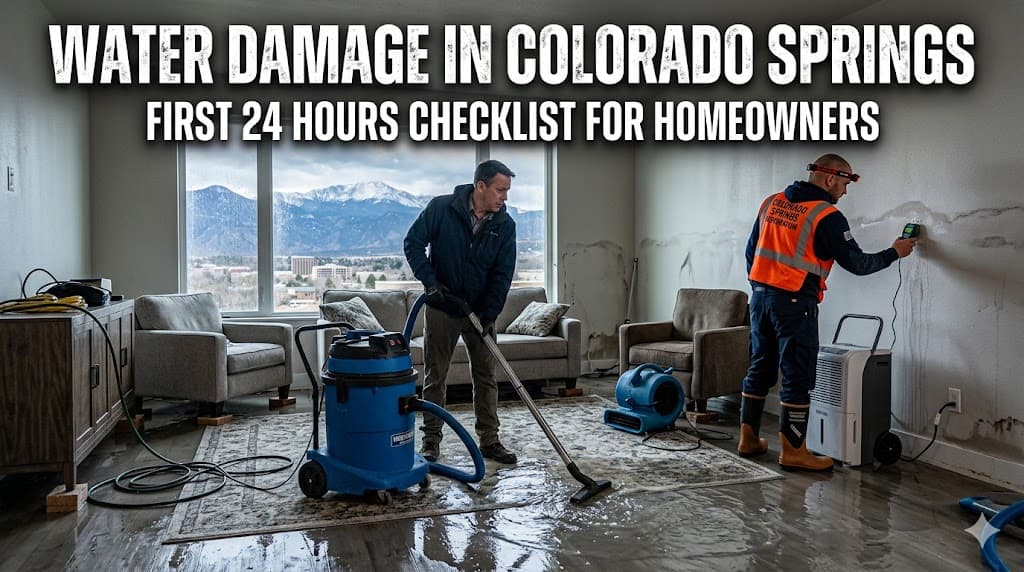
Standing water needs to come out immediately. If you have a wet-dry vacuum, use it to extract as much water as possible from hard surfaces and carpet. Move soaked area rugs outside. Lift furniture off wet carpet by placing aluminum foil or wooden blocks under legs to prevent staining and further absorption. Open windows and interior doors to improve airflow, but only run fans if the electrical system in the affected area has been confirmed safe. Household fans and a basic dehumidifier help, but they are not a substitute for professional-grade equipment. A qualified water and flood damage restoration team uses industrial air movers, commercial dehumidifiers, and moisture meters to dry structural materials that consumer equipment cannot reach.
Step 6: Address Hidden Moisture
One of the biggest mistakes homeowners make is assuming an area is dry because the surface feels dry. Moisture migrates into wall cavities, beneath tile, inside insulation, and under hardwood flooring. It can persist for days or weeks in these concealed areas without visible signs. Professional restoration teams use infrared cameras and pin-type moisture meters to map exactly where water has traveled and confirm that every affected material has been dried to safe levels. Skipping this step is one of the primary reasons mold develops weeks after a water event that appeared to be resolved.
Step 7: Protect Contents and Valuables
Move undamaged belongings out of the affected zone as soon as possible. For items already damaged by water, separate them into categories: salvageable, questionable, and likely unsalvageable. Do not throw anything away before your insurance adjuster has reviewed it or you have photographic documentation. Electronics, documents, photographs, and textiles can often be professionally restored through a contents restoration program that includes inventory, pack-out, off-site cleaning, and storage. Acting quickly on contents can save thousands in replacement costs.
Step 8: Prevent Mold Growth
Mold spores are naturally present in every indoor environment. What triggers active mold growth is sustained moisture combined with organic materials like wood, drywall paper, and carpet padding. The 24-to-48-hour window is well documented: if wet materials are not dried within this timeframe, mold colonies can begin forming. Once established, mold requires professional mold mitigation to remove safely, which adds significant cost and time to the recovery. The best mold prevention strategy is aggressive early drying. If you are uncertain whether your home has been dried adequately, request a professional moisture assessment before closing up walls or replacing finishes.
When to Call a Professional Restoration Company
If the water-affected area is larger than a single small room, involves contaminated water, has reached wall cavities or structural framing, or your home has been wet for more than a few hours, professional restoration is strongly recommended. Professionals bring the equipment, training, and documentation protocols needed to dry the structure safely, support insurance claims, and reduce the risk of secondary damage. At CC Restoration, we respond to water emergencies across Colorado Springs, Denver, Pueblo, and the entire Front Range. Our team handles extraction, structural drying, moisture mapping, contents protection, and full coordination with your insurance carrier.
What Happens If You Wait Too Long?
Delayed response after water damage leads to compounding problems. Materials that could have been dried and saved may need full replacement. Mold remediation may be required on top of the original water damage restoration. Insurance carriers may reduce coverage if they determine that the homeowner did not take reasonable steps to mitigate the loss promptly. The financial and emotional impact increases with every day of delay.
If your home or business has water damage, do not wait. Contact CC Restoration for a fast damage assessment and clear next steps. We serve Colorado Springs, Denver, Boulder, Fort Collins, and communities across the state with 24/7 emergency response.